Choosing wall and ceiling panels is one of the biggest decisions in any cleanroom project. The panels decide how well your room holds temperature, how easily it can be cleaned, how it behaves in a fire, and how much you spend over the next 15 to 20 years.
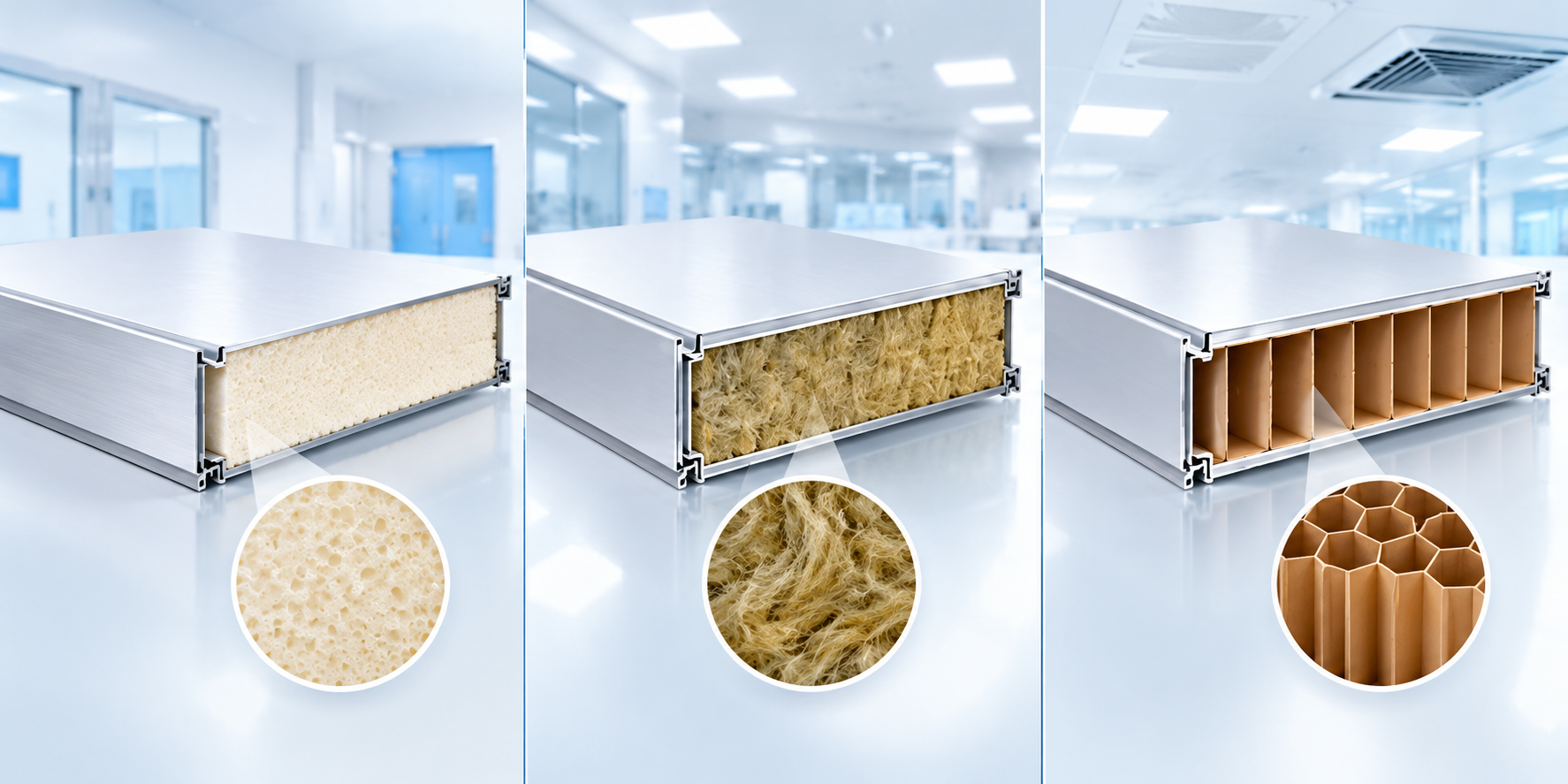
Most modular cleanroom panels share the same outer skin, usually pre-painted galvanised steel (PPGI), stainless steel or powder-coated aluminium. The real difference lies in the core. The three most common cores are PUF (polyurethane foam), Rockwool (mineral wool) and Honeycomb.
In this guide we compare all three on the factors that matter most, so you can pick the right panel for your pharma, electronics, food, hospital or laboratory cleanroom.
What Are Cleanroom Panels?
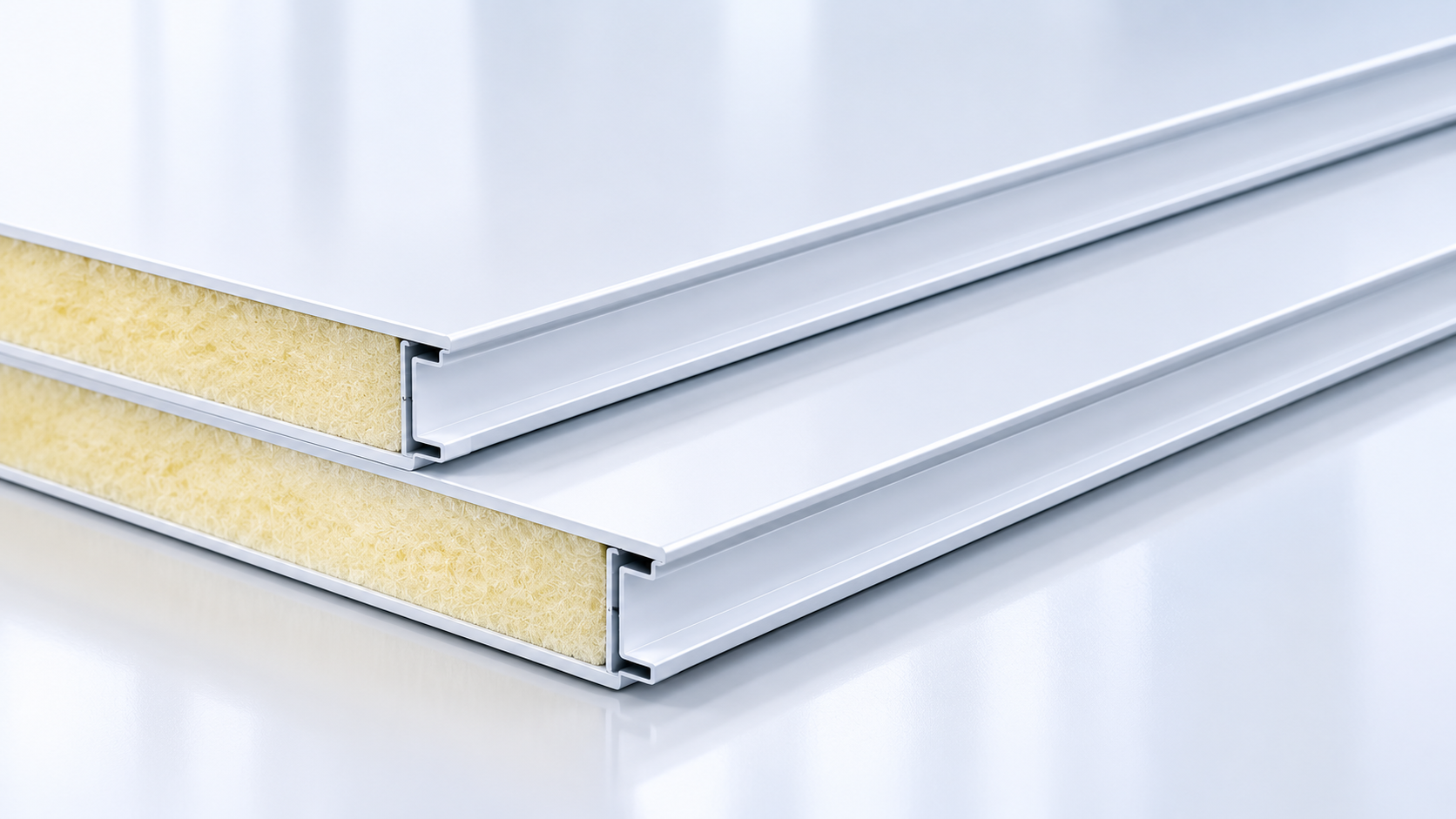
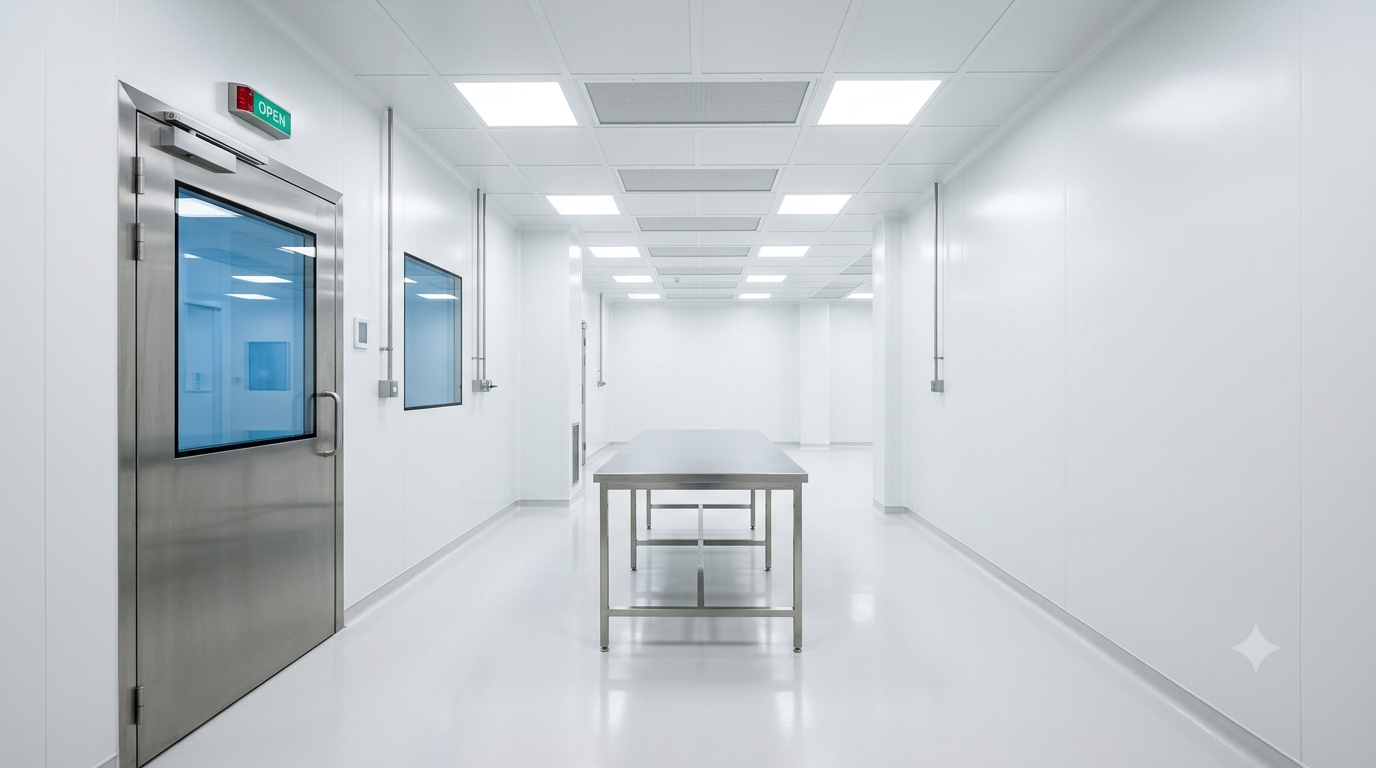
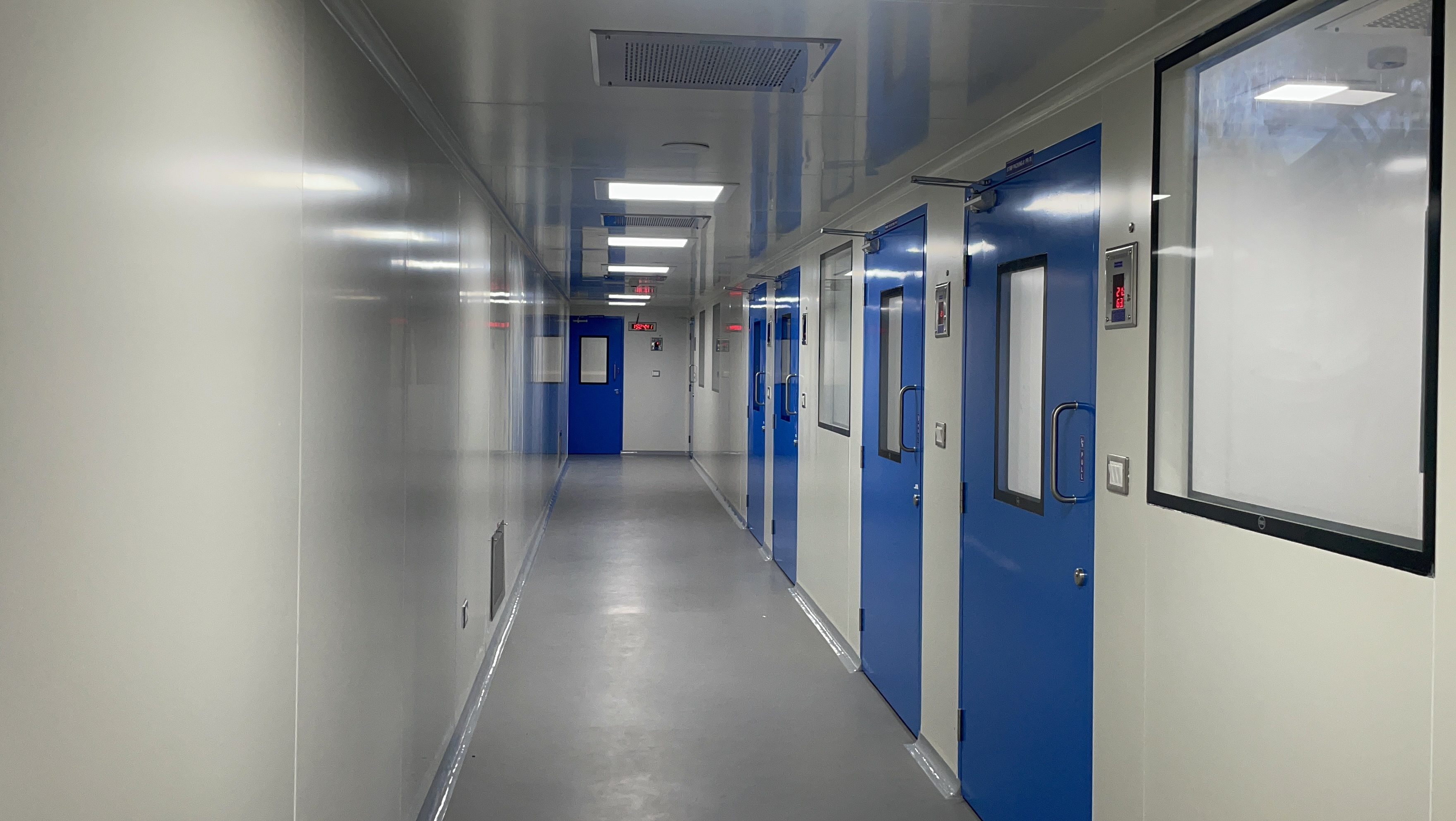
Cleanroom panels are prefabricated sandwich panels used to build walls, partitions and ceilings of controlled environments. They are designed to be smooth, non-shedding, easy to clean and quick to install, with flush joints and coved corners that avoid dust traps.
A good cleanroom panel should:
- Support the required ISO 14644 cleanliness class
- Stay airtight so pressure differentials can be maintained
- Resist repeated cleaning and disinfection
- Meet fire safety requirements for the building
- Insulate well enough to keep HVAC loads under control
The core material is what balances these requirements.
PUF (Polyurethane Foam) Core Panels
PUF panels have a rigid polyurethane foam core, injected and bonded between two metal skins. They are the most widely used panels in cleanroom and cold-storage construction across India.
Advantages of PUF Panels
- Excellent thermal insulation. PUF has one of the lowest thermal conductivity values among common core materials, which helps reduce HVAC running costs.
- High structural strength for its weight. The foam bonds firmly to the skins, giving a rigid, flat panel.
- Good moisture resistance. The closed-cell structure does not absorb water easily.
- Fast installation. Standard tongue-and-groove or cam-lock systems allow quick assembly.
- Cost-effective. For most general-purpose cleanrooms, PUF gives the best value per square metre.
Limitations of PUF Panels
- Lower fire resistance than mineral wool. Standard PUF is combustible, although flame-retardant and PIR (polyisocyanurate) grades improve performance.
- Not ideal where a high fire rating is mandatory. Some projects and local authorities require non-combustible cores.
Best Applications for PUF Panels
- Pharmaceutical oral solid dosage (OSD) areas and packing rooms
- Cold rooms and temperature-controlled zones
- Food processing and packaging cleanrooms
- Electronics assembly and general-purpose ISO 7 and ISO 8 rooms
Rockwool (Mineral Wool) Core Panels
Rockwool panels use a dense mineral wool core made from basalt rock fibres, sandwiched between metal skins. They are chosen mainly where fire safety and sound control come first.
Advantages of Rockwool Panels
- Non-combustible core. Mineral wool is rated for high fire performance, and panels can be supplied with fire resistance ratings suited to fire-critical areas.
- Good acoustic insulation. The dense fibre structure absorbs sound better than foam cores.
- High temperature tolerance. Suitable for areas near ovens, autoclaves, dryers or other heat sources.
- Stable in hot environments. The core does not melt or drip.
Limitations of Rockwool Panels
- Heavier than PUF and Honeycomb. This affects structural support and installation effort.
- Higher thermal conductivity. Thicker panels may be needed to match PUF insulation.
- Needs well-sealed edges. Fibres must stay fully enclosed so nothing sheds into the cleanroom, and moisture must be kept out.
- Usually costs more than PUF.
Best Applications for Rockwool Panels
- Pharma facilities with strict fire compliance requirements
- Areas close to heat-generating equipment
- Hospitals and healthcare buildings with fire-rated partitions
- Rooms where acoustic comfort matters, such as laboratories and control rooms
Honeycomb Core Panels
Honeycomb panels use a lightweight core of aluminium, paper or polymer cells arranged in a hexagonal pattern, bonded to metal or other rigid skins. The cell structure gives the panel remarkable stiffness without much weight.
Advantages of Honeycomb Panels
- Very light weight. Easier to handle, transport and install, and puts less load on the building structure.
- Exceptional flatness and rigidity. Ideal for large spans, doors and ceilings.
- Smooth, clean surfaces. Well suited to rooms with frequent washdowns.
- Corrosion resistance when aluminium cores and skins are used.
- Good for doors and pass boxes. Many cleanroom doors and service panels use honeycomb because they stay light and flat.
Limitations of Honeycomb Panels
- Limited thermal insulation. Honeycomb is not an insulator on its own, so it is a poor choice where temperature control is critical.
- Fire performance depends on materials. Aluminium cores perform better than paper cores, but the bonding adhesives and skins also matter.
- Cost varies. Aluminium honeycomb can be priced above PUF.
Best Applications for Honeycomb Panels
- Cleanroom doors, hatches and service shutters
- Ceiling systems and large partition panels where weight matters
- Semiconductor, electronics and optical facilities needing flat, rigid surfaces
- Humid or wash-down areas where corrosion resistance is useful
PUF vs Rockwool vs Honeycomb: Side-by-Side Comparison
| Factor | PUF Panels | Rockwool Panels | Honeycomb Panels |
|---|---|---|---|
| Thermal insulation | Excellent | Good | Low |
| Fire performance | Moderate (better with PIR/FR grades) | Excellent (non-combustible core) | Depends on core and adhesive |
| Weight | Light to medium | Heavy | Very light |
| Acoustic insulation | Moderate | Excellent | Moderate |
| Moisture resistance | Very good | Needs sealed edges | Very good (aluminium) |
| Surface flatness and rigidity | Very good | Good | Excellent |
| Typical cost | Low to medium | Medium to high | Medium to high |
| Best for | General cleanrooms, cold zones | Fire-critical and hot areas | Doors, ceilings, lightweight partitions |
Exact performance depends on panel thickness, core density, skin material and the manufacturer's test certificates, so always check the datasheet for your specific product.
How to Choose the Right Cleanroom Panel for Your Application
Ask these six questions before you finalise the panel type.
1. What are your fire safety requirements?
If local fire codes, your insurer or your client require non-combustible construction, Rockwool is usually the safest choice. If standard fire norms apply, flame-retardant PUF or PIR is often accepted.
2. How critical is temperature control?
For rooms with tight temperature and humidity limits, such as stability chambers, cold rooms and sterile suites, PUF gives the best insulation and the lowest HVAC load.
3. What cleanliness class do you need?
Any of the three can support ISO 5 to ISO 8 when the panel system, joints and sealing are properly designed. The cleanliness class depends more on the flush finish, coved corners, sealing and HVAC design than on the core alone.
4. How heavy can your structure be?
If you are building a mezzanine or a cleanroom on an existing structure with limited load capacity, Honeycomb or PUF will ease the burden compared with Rockwool.
5. What is your budget and timeline?
PUF is generally the most economical and the quickest to deliver. Rockwool and Honeycomb can raise the project cost, so use them where they are really needed.
6. Which industry standards apply to you?
Pharmaceutical cleanrooms follow cGMP, Schedule M and EU GMP Annex 1 expectations, while ISO 14644 governs cleanliness classification. Hospital OTs, food plants and electronics facilities have their own norms. Confirm your regulatory requirements before selecting the core.
Quick Recommendations by Industry
- Pharmaceutical (OSD, packing, general areas): PUF panels, with Rockwool in fire-critical zones
- Sterile and aseptic suites: PUF or Rockwool walls with smooth, flush, coved finishes
- Hospital operation theatres: PUF or Rockwool depending on fire rating requirements
- Electronics and semiconductor: PUF walls with Honeycomb for ceilings and doors
- Food and beverage: PUF panels with food-grade skins
- Laboratories and R&D: PUF or Rockwool, with Rockwool where sound control matters
Many real projects use a combination. For example, PUF for general walls, Rockwool for fire-rated partitions and Honeycomb for doors and ceilings. Mixing cores in the same project is common and often the smartest approach.
Common Mistakes to Avoid
- Choosing on price alone. The cheapest panel can cost more later in HVAC energy, repairs or failed audits.
- Ignoring fire certification. Always ask for test reports and not just brochures.
- Overlooking joints and sealing. Even the best core fails if the joints leak or trap dust.
- Skipping the panel thickness check. Thickness affects insulation, strength and span. Common thicknesses range from 50 mm to 100 mm.
- Not planning for services. Cut-outs for lights, doors, windows and ducts should be planned at design stage.
Frequently Asked Questions
Which cleanroom panel is best: PUF, Rockwool or Honeycomb?
There is no single best panel. PUF suits most general cleanrooms thanks to its insulation and cost, Rockwool is best where fire safety is the priority, and Honeycomb is ideal for doors, ceilings and lightweight partitions.
Are PUF panels fire safe for cleanrooms?
PUF panels with flame-retardant or PIR cores are widely used in cleanrooms and perform well for general applications. If your project needs a non-combustible core, choose Rockwool.
Is Rockwool allowed in cleanrooms?
Yes, as long as the panel is fully sealed with metal skins and edge closures so that no fibres are exposed to the cleanroom environment.
Which panel is the most cost-effective?
PUF is usually the most economical option for standard cleanroom projects, followed by Rockwool and Honeycomb depending on the specification.
What panel thickness should I choose?
50 mm is common for partitions in many cleanrooms, while 80 mm to 100 mm is chosen where extra insulation, strength or fire rating is needed. Your design engineer should confirm the final thickness.
Can I use different panel types in the same cleanroom?
Yes. Many facilities combine PUF, Rockwool and Honeycomb panels in different zones to balance performance and cost.
Final Thoughts
The right core material depends on your fire norms, temperature needs, structural limits and budget. PUF is the all-round choice, Rockwool is the safest for fire-critical zones, and Honeycomb is the smart option for lightweight, rigid components like doors and ceilings.
If you are planning a new cleanroom or upgrading an existing facility, getting the panel selection right at the design stage will save you time, cost and compliance headaches later.
Plan Your Cleanroom with Venair Solutions
If you are planning a new cleanroom, upgrading an existing facility, or comparing PUF, Rockwool and Honeycomb panels for your application, Venair Solutions can help you choose the right cleanroom panels for your room size, fire safety needs and compliance requirements. Share your project details with the team on +91 77601 95229 or at marketing@venairsolutions.com to get a quotation.