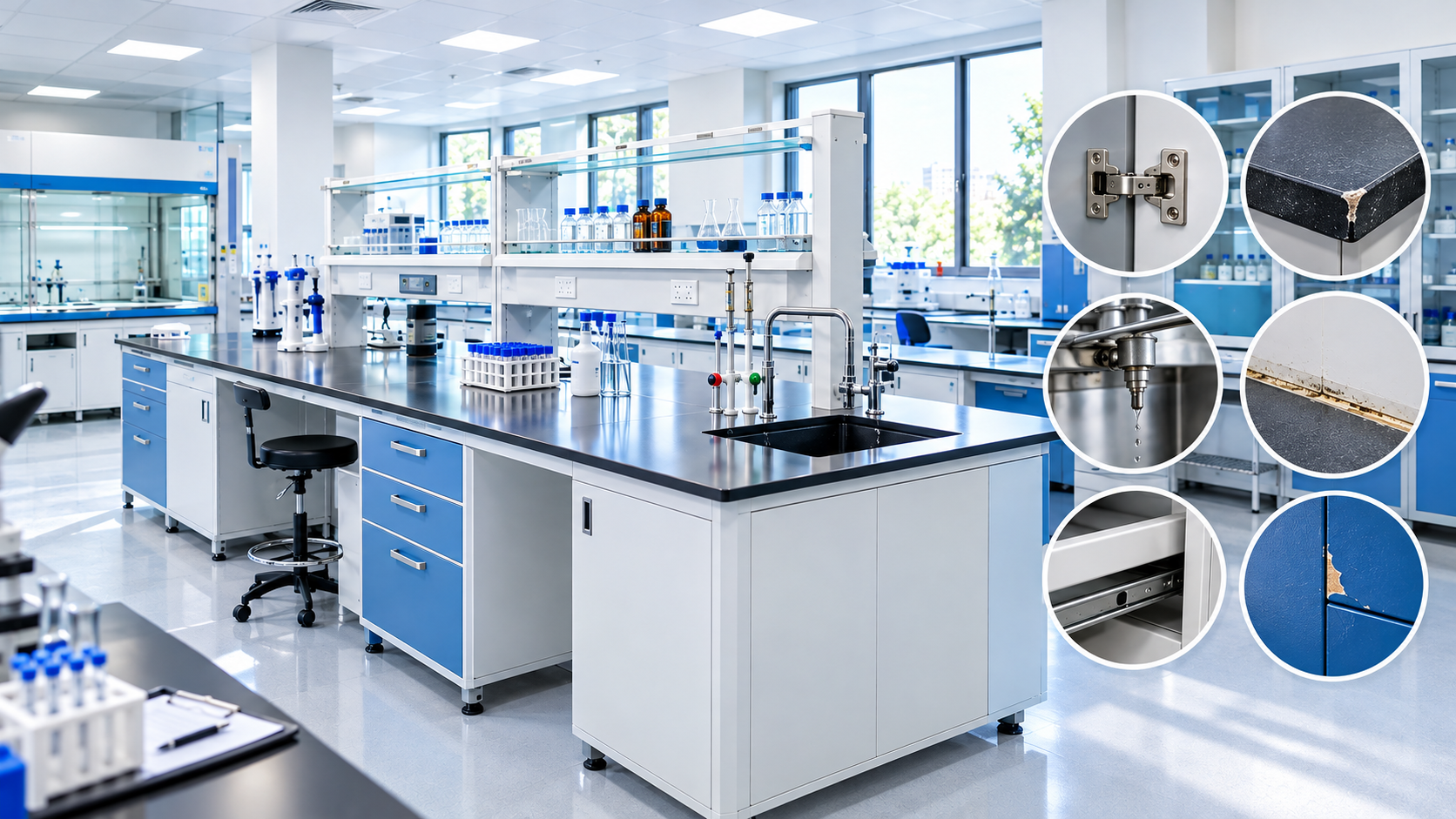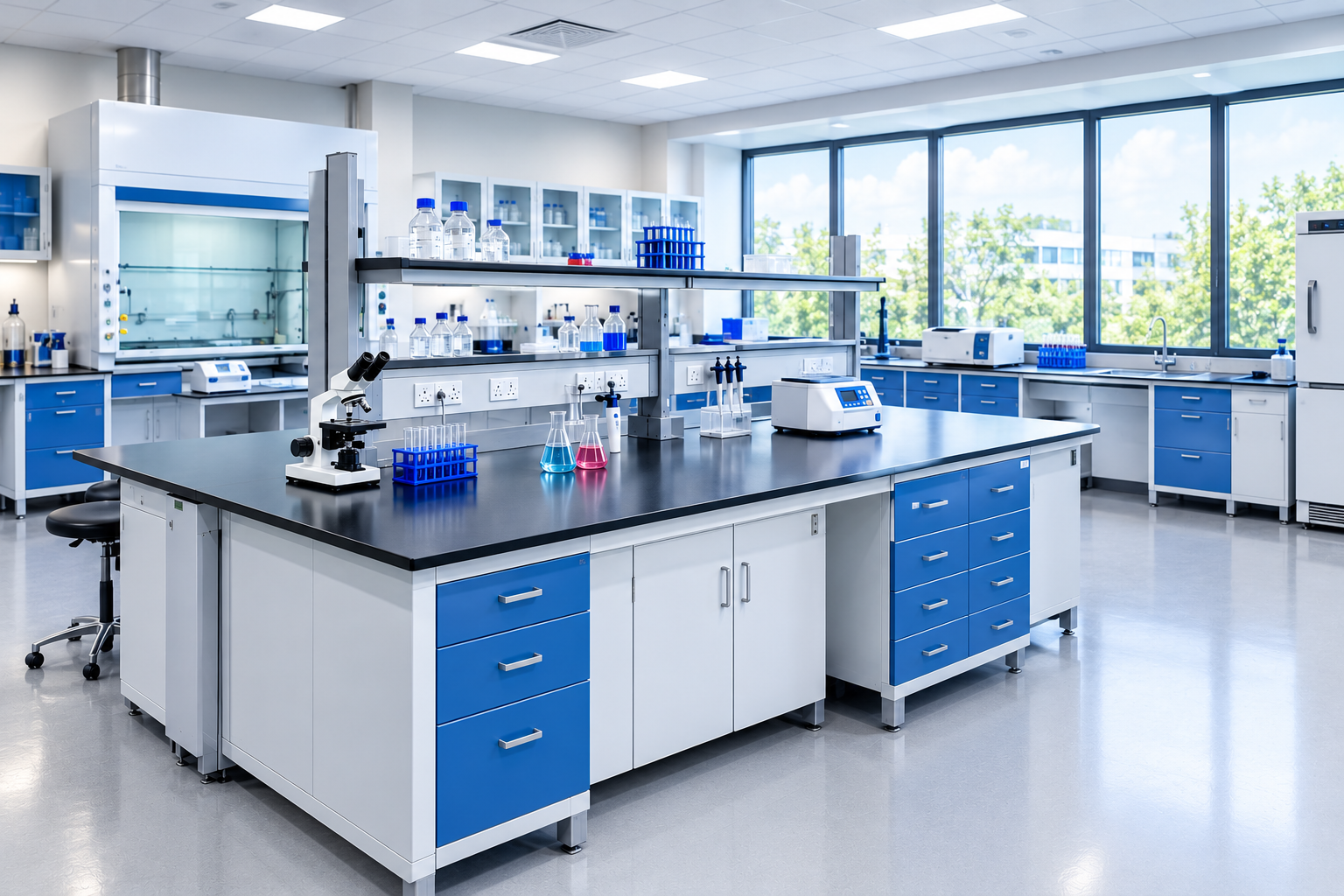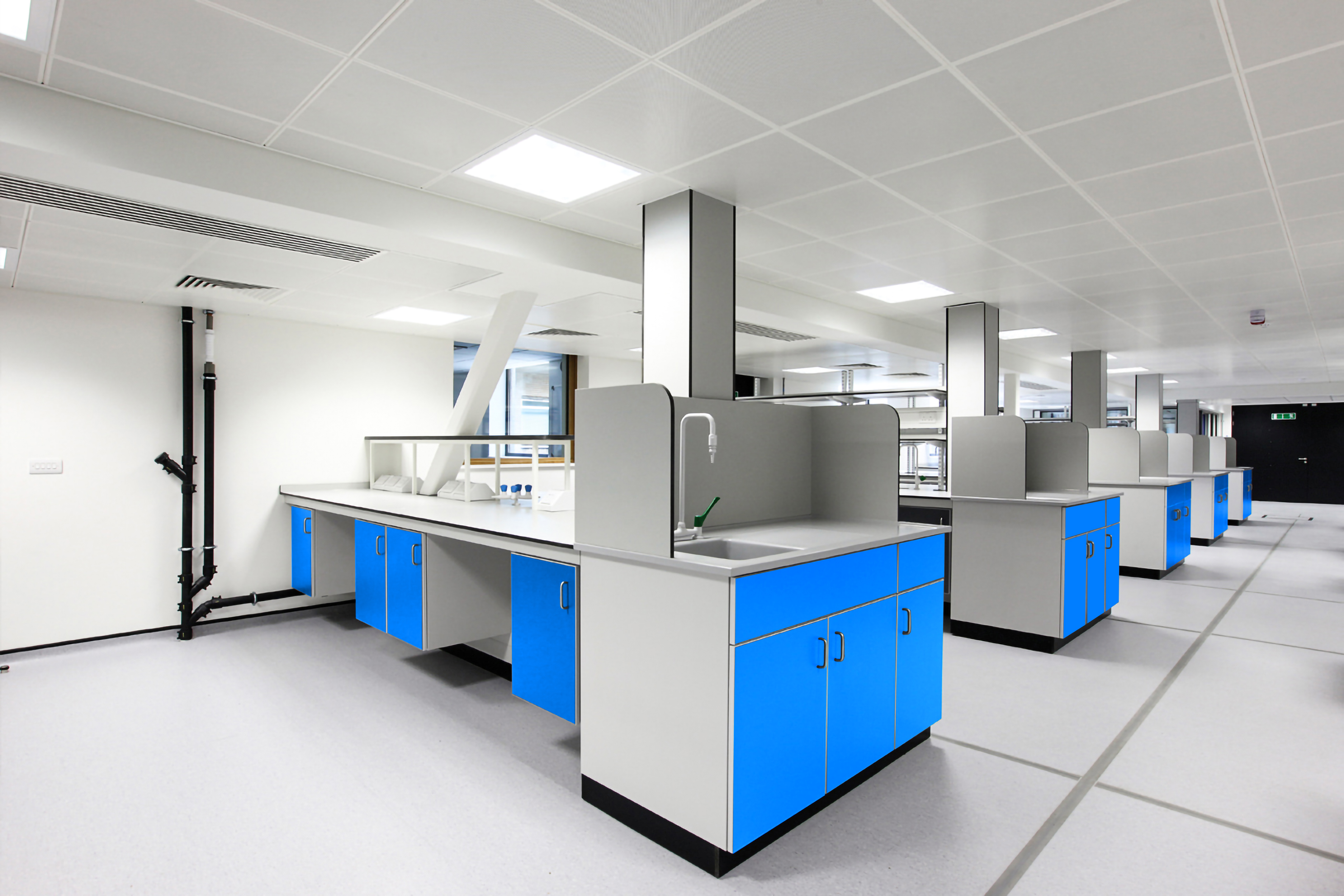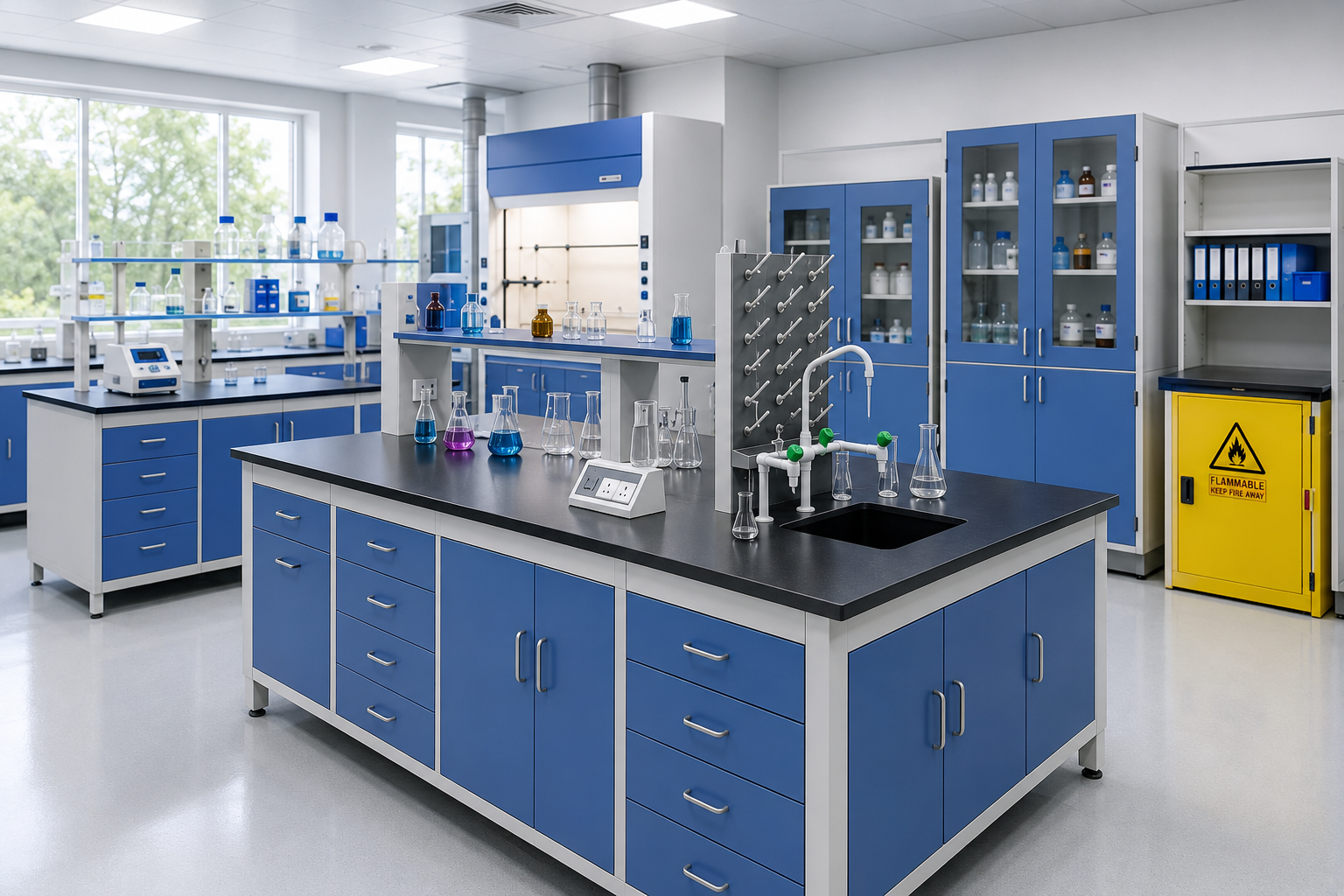
Walk into any well-run pharmaceutical QC lab, biotech research facility, or hospital pathology unit, and you'll notice something before you notice the instruments: the furniture. The benches, cabinets, sinks, and storage units aren't background details. They're the physical layer that either supports safe, compliant, efficient work — or quietly undermines it.
Most people think of laboratory furniture as an afterthought to lab design — something to source once the "real" decisions (equipment, layout, HVAC) are finalized. That's backwards. The wrong bench material corrodes under daily chemical exposure within months. The wrong storage cabinet becomes a fire code violation the day an auditor walks in. The wrong workstation height turns an eight-hour shift into a repetitive strain injury waiting to happen.
Laboratory furniture is purpose-built for a reason. Unlike office or household furniture, it has to survive daily contact with acids, solvents, disinfectants, and moisture without degrading. It has to carry the weight of centrifuges, incubators, and analytical balances without flexing. It has to integrate gas lines, water points, and electrical provisions cleanly, and it has to be cleaned and decontaminated over and over again without losing its surface integrity.
This guide is written for the people who actually have to make these decisions — procurement managers setting up a new pharmaceutical facility, lab owners upgrading aging infrastructure, architects specifying furniture for a hospital diagnostic wing, and researchers who've simply had enough of benches that don't hold up. We'll cover what laboratory furniture actually is, the materials and types available, how to choose based on your specific lab environment, the compliance standards that govern selection, and the mistakes that cost labs time, money, and audit failures.
Whether you're building a new pharmaceutical R&D lab, upgrading a university chemistry department, or fitting out a cleanroom for semiconductor testing, the goal is the same: furniture that supports safety, compliance, and productivity for the next fifteen to twenty years, not just the next inspection.
What Is Laboratory Furniture?
Laboratory furniture is a category of purpose-engineered workspace furniture — benches, cabinets, sinks, storage racks, and workstations — designed to withstand chemical exposure, support scientific equipment, integrate utilities like gas and water, and meet hygiene and safety standards specific to research, pharmaceutical, healthcare, and industrial lab environments.
Unlike commercial or office furniture, laboratory furniture is defined by four non-negotiable requirements:
- Chemical resistance — surfaces must not corrode, stain, or degrade under repeated exposure to acids, solvents, and disinfectants
- Load-bearing capacity — benches and cabinets must support heavy analytical instruments without warping
- Utility integration — built-in provisions for gas valves, water points, and electrical outlets
- Cleanability — smooth, non-porous, crevice-free surfaces that support decontamination protocols
Why Laboratory Furniture Is Essential
Laboratory furniture isn't a cosmetic choice — it directly affects three outcomes that matter to every lab: safety, compliance, and productivity.
- Safety. Chemical-resistant cabinets with proper exhaust prevent fume buildup. Sink units positioned near hazard zones support rapid decontamination. Furniture with rounded edges and stable load ratings reduces injury risk in high-traffic lab environments.
- Compliance. Regulatory frameworks — GMP, ISO 14644, GLP, NABL — don't just govern your processes. They extend to the physical infrastructure your processes run on. Furniture with the wrong surface finish or an unsealed joint can fail a cleanroom particle audit even when every other system passes.
- Productivity. Poorly planned furniture layouts create bottlenecks. A single-access wall bench in a multi-user QC lab forces researchers to queue. An island table with full four-side access lets three technicians work simultaneously on the same analysis run. Furniture decisions are workflow decisions.
Types of Laboratory Furniture
A functioning laboratory rarely needs just one type of furniture — it needs a coordinated system. Here's a breakdown of the core categories.
Laboratory Benches
The workhorse of any lab. Laboratory benches come in two primary configurations:
- Wall benches — positioned against a wall, accessed from one side, typically used for instrument placement and routine bench work
- Island benches — freestanding units accessible from all four sides, built for high-collaboration environments like QC labs and teaching laboratories
Island modular laboratory tables, in particular, are increasingly the default in pharmaceutical QC and research labs because they support multiple simultaneous users and can be reconfigured as lab needs evolve. These typically ship with reagent racks, electrical points, and gas or water valve fittings built in.
Workstations
Workstations combine a bench surface with integrated storage, utility points, and sometimes instrument mounting — designed around a specific task rather than general-purpose use. A titration workstation, for example, looks different from a microscopy workstation, even though both start from the same base bench structure.
Storage Cabinets
Lab storage cabinets organize equipment, consumables, and general lab supplies. Look for adjustable shelving, lockable shutters, and drawer configurations that match your actual inventory — not generic office cabinet proportions.
Chemical Storage
This is where furniture becomes a genuine safety system, not just storage. Chemical-resistant cabinets with built-in exhaust are engineered specifically for hazardous, flammable, or corrosive substances. The exhaust system continuously draws fumes out of the cabinet interior, preventing dangerous vapor accumulation, and the interior surfaces are chosen specifically not to react with whatever's stored inside.
Fume Hoods
Fume hoods (and their biosafety cabinet relatives) are specialized enclosures that protect the researcher from airborne chemical or biological hazards using directed airflow. While not always classified as "furniture" in the strictest sense, they're planned and installed alongside benches and cabinets as part of the same utility and layout system, and their placement significantly affects surrounding furniture design.
Sink Units
Laboratory sink units are fabricated from stainless steel — not the same material or depth as a domestic sink — with smooth, crevice-free surfaces built to resist chemical staining. Available in single and double basin configurations, with integrated plumbing for hot and cold water and waste drainage, they're positioned based on hazard zones and workflow, not just convenience.
Mobile Laboratory Furniture
Mobile carts, rolling storage units, and adjustable-height mobile workstations give labs flexibility — particularly useful in teaching labs, shared facilities, or research environments where layouts change frequently between projects.
Modular Laboratory Furniture
Modular laboratory furniture is designed for reconfiguration. Instead of fixed, built-in installations, modular systems use standardized components that can be rearranged, extended, or replaced as lab requirements evolve — a critical advantage for growing pharmaceutical companies and multi-purpose research facilities.
Choosing the Right Materials
Material selection is the single most consequential decision in laboratory furniture procurement, because it determines how the furniture performs for the next decade or more.
| Material | Chemical Resistance | Best For | Cost |
|---|---|---|---|
| Stainless Steel SS 304 | High — resists most lab chemicals, corrosion, oxidation | Pharmaceutical, research, healthcare labs (majority of use cases) | Moderate–High |
| Stainless Steel SS 316 | Very High — added molybdenum resists chlorides, acids, saline | Labs handling strong acids, chlorine disinfectants, coastal/humid environments | High |
| GI Powder-Coated Steel | Moderate | General research labs, educational institutions, moderate chemical exposure | Cost-effective |
| Epoxy Resin Worktops | Very High — seamless, non-porous, heat and chemical resistant | Benchtop surfaces in chemistry and pharma labs | Moderate–High |
| Phenolic Worktops | High — moisture and impact resistant | Wet labs, biology labs | Moderate |
| Trespa Worktops | High — durable compact laminate | General lab benchtops, teaching labs | Moderate |
SS 304 vs. SS 316 — the decision that matters most. SS 304 contains roughly 18% chromium and 8% nickel, giving it strong resistance to most everyday lab chemicals and making it suitable for the majority of pharmaceutical, research, and healthcare environments. SS 316 adds 2–3% molybdenum, which significantly improves resistance to chlorides, saline solutions, acidic reagents, and aggressive solvents. If your lab regularly handles strong acids, chlorine-based disinfectants, or operates in a high-humidity or coastal location, SS 316 is worth the additional cost. For general pharmaceutical QC and research use, SS 304 is the standard, cost-effective choice.
Safety Features
Purpose-built lab furniture bakes safety into its design rather than treating it as an add-on:
- Rounded edges and corners to reduce injury risk
- Chemical-resistant, non-reactive interior surfaces for hazard storage
- Built-in exhaust systems on chemical storage cabinets
- Lockable shutters and drawers restricting unauthorized chemical access
- Stable, rated load-bearing capacity for heavy instruments
- Non-slip, spill-resistant surface finishes
- Proximity planning to eyewash stations and emergency showers for chemical-handling areas
Ergonomic Design
Ergonomics in lab furniture isn't a soft consideration — it's a productivity and injury-prevention issue. Bench heights should match the primary task (standing analytical work typically needs a higher bench than seated microscopy work). Storage should be positioned within natural reach zones so technicians aren't repeatedly bending or overreaching. Utility points — gas, water, electrical — should sit where they're used, not wherever the plumbing happened to run. A lab that ignores ergonomics doesn't just risk employee discomfort; it slows down every task performed at that bench, every day, for years.
Space Optimization
Labs rarely have the luxury of unlimited floor space, which makes furniture layout a genuine engineering problem. Vertical storage racks reduce footprint compared to floor-level cabinets. Mobile furniture allows a single room to serve multiple functions across a week. Island benches, while requiring more floor area than wall benches, often improve overall throughput enough to justify the space trade-off in high-volume QC environments. The right approach depends on your specific workflow — which is why site assessment, not a generic floor plan, should always precede furniture selection.
Utility Integration
Modern laboratory furniture should arrive with utilities designed in, not retrofitted:
- Gas distribution systems — integrated valve fittings for Bunsen burners, analytical instruments, and specialty gas applications
- Water points — hot and cold supply integrated into sink units and wash stations
- Electrical raceway — dedicated, properly rated electrical provisions built into bench structures, avoiding surface-mounted cords and extension leads that create both safety and cleanliness risks
Retrofitting utilities into furniture after installation is expensive and often results in compromised surface integrity — precisely the kind of exposed conduit or drilled penetration that fails a cleanroom particle audit.
Laboratory Planning
Furniture selection should never happen in isolation from the broader lab design process. A proper laboratory planning sequence looks like this:
- Site survey and workflow mapping — understanding how people, samples, and materials actually move through the space
- Regulatory and compliance assessment — identifying which standards (GMP, ISO, NABL) apply to your specific operation
- Furniture and equipment layout design — positioning benches, cabinets, and utilities around the mapped workflow
- Utility coordination — aligning furniture utility points with HVAC, electrical, and plumbing systems
- Fabrication and installation — building and fitting furniture to the finalized design
- Validation and handover — confirming the completed space meets its intended compliance and performance standards
Skipping the workflow-mapping step is the single most common reason labs end up with furniture that technically works but never quite fits how the team actually operates.
Compliance Considerations
Several international standards directly influence laboratory furniture specification, even though most of them weren't written with furniture in mind first:
- ISO 14644 — governs cleanroom classification and contamination control; directly affects furniture surface finish and material choice in cleanroom environments
- GMP (Good Manufacturing Practice) — requires hygienic, cleanable, non-reactive surfaces throughout pharmaceutical manufacturing and QC spaces
- GLP (Good Laboratory Practice) — governs the integrity of research and testing environments, indirectly shaping storage and workspace requirements
- NABL — accreditation standards for testing and calibration labs in India, often referencing infrastructure and equipment suitability
- WHO guidelines — inform pharmaceutical facility design globally, including surface hygiene standards
- OSHA — occupational safety requirements affecting chemical storage, ventilation, and emergency equipment placement
- SEFA (Scientific Equipment and Furniture Association) — sets furniture-specific performance and testing standards used as an industry benchmark
- ASHRAE — governs HVAC standards that intersect with furniture placement around airflow and pressurization zones
- NFPA — fire safety codes affecting chemical storage cabinet design and placement
Furniture that ignores these standards doesn't just risk a failed audit — it risks the underlying safety outcome the standard was written to protect.
Industry Applications
Laboratory furniture requirements shift meaningfully across sectors:
- Pharmaceutical manufacturers — GMP-compliant SS 304/316 workbenches, island tables for QC labs, chemical-resistant storage for API handling
- Biotechnology companies — cleanroom-compatible furniture for cell culture and genomics work, meeting ISO 14644 particle-shedding requirements
- Hospitals and diagnostic centers — pathology and microbiology lab furniture built for biohazard handling and rapid decontamination
- Universities and research institutions — durable, cost-effective GI powder-coated or SS 304 furniture across chemistry, biology, and engineering labs
- Food testing laboratories — chemical-resistant surfaces and sink units supporting frequent hygiene testing protocols
- Electronics and semiconductor facilities — cleanroom-grade, static-controlled, non-particle-shedding furniture
- Chemical industries — SS 316 furniture with exhaust-integrated chemical storage for aggressive reagent handling
Common Mistakes to Avoid
- Choosing furniture material based on price alone, without assessing the lab's actual chemical exposure profile
- Buying modified standard furniture instead of purpose-built lab furniture, resulting in surfaces that degrade or fail compliance within a year or two
- Skipping the site assessment and workflow mapping step, leading to layouts that don't match how the lab actually operates
- Ignoring utility integration during design, forcing costly retrofits or exposed conduit that compromises cleanroom compliance
- Overlooking ergonomic bench heights, resulting in operator fatigue and reduced accuracy over long shifts
- Underestimating storage needs, leading to overcrowded benches and non-compliant chemical storage practices
- Selecting a vendor without cleanroom or GMP experience for regulated pharmaceutical or biotech environments
Preventive Maintenance
Laboratory furniture is a long-term capital investment, and preventive maintenance protects that investment:
- Routine surface inspection for scratches, pitting, or corrosion, especially on SS 304/316 surfaces exposed to aggressive chemicals
- Hinge and hardware checks on cabinets and drawers, replacing worn components before they fail
- Exhaust system verification on chemical storage cabinets to confirm continued fume extraction performance
- Utility point testing — gas valves, water fittings, and electrical points should be checked on a scheduled basis, not only when something fails
- Cleaning protocol adherence using disinfectants compatible with the furniture's specific surface material
- Documentation of maintenance activity for audit and compliance records in regulated environments
Buying Guide
When evaluating laboratory furniture for purchase, work through these decision points in order:
- Define your chemical exposure profile — what substances will regularly contact the furniture surface?
- Match material grade accordingly — SS 304 for general use, SS 316 for aggressive chemical or high-humidity environments, GI powder-coated for cost-sensitive, moderate-exposure settings
- Map your workflow before finalizing bench configuration — island vs. wall, single-user vs. multi-user
- List utility requirements — gas points, water fittings, electrical outlets — and confirm they're integrated, not retrofitted
- Confirm compliance alignment with the standards relevant to your facility (GMP, ISO 14644, NABL, etc.)
- Evaluate customization capability — can the manufacturer accommodate your specific sizes, configurations, and accessories?
- Check installation and after-sales support — furniture with poor installation quality underperforms regardless of material grade
How to Choose the Right Laboratory Furniture Manufacturer
Not all laboratory furniture manufacturers offer the same level of capability. When evaluating a supplier, look for:
- Correct material fabrication expertise — genuine SS 304, SS 316, and GI powder-coated manufacturing, not relabeled generic steel
- Sector-specific experience — a manufacturer who has actually delivered furniture into pharmaceutical, cleanroom, or research environments similar to yours
- True customization capability — custom sizes, shapes, and integrated accessories, rather than modified standard catalog items
- End-to-end service — site assessment, design, fabrication, installation, and after-sales support from a single accountable team
- Compliance documentation support — particularly important for pharmaceutical and regulated facilities preparing for audits
- Regional delivery and support capacity — especially relevant for pan-India projects where after-sales response time matters
Venair Solutions, a Bangalore-based laboratory furniture manufacturer, fabricates custom SS 304, SS 316, and GI powder-coated furniture — including island modular laboratory tables, storage cabinets, sink units, storage racks, and chemical-resistant cabinets with exhaust — for pharmaceutical, research, and cleanroom clients across India, backed by end-to-end design, fabrication, and installation support.
Future Trends
Smart Laboratories
Laboratory furniture is beginning to integrate with lab automation and digital monitoring systems — benches with embedded sensors tracking utility usage, storage cabinets with digital access logs for regulated substances, and modular systems designed to accommodate robotics and automated sample handling as labs move toward higher-throughput, less manual workflows.
Sustainable Laboratory Furniture
Sustainability is increasingly factoring into furniture specification — manufacturers offering recyclable stainless steel construction, powder-coating processes with reduced volatile organic compound emissions, and modular designs that extend furniture lifespan through reconfiguration rather than replacement. For facilities pursuing green building certifications alongside GMP or ISO compliance, furniture material sourcing and finishing processes are now part of the sustainability conversation.
Frequently Asked Questions
What is laboratory furniture and why does it need to be purpose-built?
Laboratory furniture is a specialized category of workspace furniture designed for scientific, research, pharmaceutical, and industrial environments. Unlike standard office furniture, it must withstand daily exposure to chemicals, solvents, and disinfectants without corroding or degrading, support heavy equipment loads, provide integrated utility fittings for gas, water, and electricity, and maintain smooth, non-porous surfaces suited to repeated cleaning and decontamination. Purpose-built furniture also supports ergonomic workflow design, ensuring bench heights and storage placement are optimized for the specific tasks performed in that lab.
What materials are used in laboratory furniture manufacturing?
The two primary material categories are stainless steel and GI powder-coated steel. SS 304 is the most widely used grade for lab workbenches, sinks, and storage, offering strong corrosion and chemical resistance suited to pharmaceutical and research environments. SS 316 offers superior resistance to chlorides, acids, and aggressive solvents, making it preferable for labs handling highly corrosive chemicals or operating in humid conditions. GI powder-coated steel is a cost-effective option suited to general research and educational labs with moderate chemical exposure.
What is the difference between SS 304 and SS 316 for lab furniture?
Both are austenitic stainless steels, but they differ in composition and resistance. SS 304 contains around 18% chromium and 8% nickel, offering strong resistance to most lab chemicals and suiting the majority of pharmaceutical, research, and healthcare environments. SS 316 adds 2–3% molybdenum, giving it significantly better resistance to chlorides, saline solutions, and acidic reagents. Labs handling strong acids, chlorine-based disinfectants, or operating in coastal or high-humidity conditions should specify SS 316.
What is an island modular laboratory table and where is it used?
An island modular laboratory table is a freestanding workbench accessible from all four sides, unlike a wall-mounted bench accessible only from the front. This design suits high-collaboration environments like pharmaceutical QC labs, research facilities, and teaching laboratories where multiple users need simultaneous access to the same surface. These tables typically include integrated reagent racks, electrical points, and gas or water valve fittings, and are built in custom sizes to fit the lab's floor plan.
What is a chemical resistant cabinet with exhaust and when is it required?
This is a specially engineered storage unit for hazardous, flammable, or corrosive chemicals. Its interior surfaces are fabricated from materials that don't react with stored substances, and a built-in exhaust system continuously draws fumes out of the cabinet, preventing dangerous vapor buildup and protecting indoor air quality. These cabinets are required in any lab storing acids, bases, solvents, or other volatile chemicals, and are typically specified under laboratory safety and factory compliance regulations.
Can laboratory furniture be customized for specific lab layouts and requirements?
Yes. Since every lab has a distinct floor plan and workflow, standard off-the-shelf furniture rarely fits precisely. Reputable manufacturers fabricate to custom sizes, shapes, and finishes, integrating accessories like reagent racks, gas and water valve fittings, electrical points, sinks, lockable shutters, and drawer configurations based on a site assessment — whether for a compact single-bench QC setup or a full modular pharmaceutical research layout.
What laboratory furniture is required for a pharmaceutical lab?
A pharmaceutical lab typically needs SS 304 or SS 316 workbenches with smooth, non-porous surfaces; island modular tables for multi-user QC and R&D access; stainless steel sink units for equipment rinsing and handwashing; lockable storage cabinets with adjustable shelves; chemical-resistant cabinets with exhaust for hazardous substance storage; and storage racks for PPE and general supplies. All furniture should comply with GMP surface hygiene and contamination control requirements.
What is a laboratory sink unit and what are its specifications?
A laboratory sink unit is a purpose-built stainless steel sink, distinct from domestic or commercial sinks in material grade, depth, chemical resistance, and plumbing integration. Fabricated in SS 304 or SS 316 with smooth, crevice-free surfaces that resist chemical staining, these units are available in single and double basin configurations with integrated hot and cold water supply and waste drainage, and can be supplied as standalone units or integrated into a larger modular bench.
Is laboratory furniture suitable for cleanroom environments?
Yes, when correctly specified. Cleanroom-compatible lab furniture must have non-particle-shedding, completely smooth surfaces with no exposed fasteners or recesses that trap particles, resist the specific disinfectants used in the facility's validated cleaning protocol, and avoid hollow structural members that can't be cleaned internally. This furniture is designed to meet ISO 14644 and GMP contamination control requirements for pharmaceutical, biotech, and semiconductor testing environments.
How is laboratory furniture installed and what after-sales support is typically available?
End-to-end laboratory furniture service covers initial site assessment, custom design, fabrication, delivery, and on-site installation, including positioning and fixing furniture to the agreed layout and connecting utility provisions like electrical points, gas valves, and water fittings. After-sales support usually includes adjustment assistance, replacement of hardware such as hinges and locks, and cleaning and maintenance guidance. Regulated facilities can also expect documentation support for compliance and audit purposes.
Which industries need laboratory furniture?
Laboratory furniture is required across pharmaceutical companies (QC labs, R&D, API manufacturing), biotechnology and life sciences (research and genomics labs), hospitals and diagnostic centers (pathology and microbiology labs), educational institutions (chemistry, biology, and engineering labs), industrial and manufacturing facilities (material testing labs), research organizations, and the food and beverage industry (safety testing labs).
How do I choose the right laboratory furniture manufacturer?
Look for a manufacturer who fabricates in the correct material grade for your environment, offers genuine customization rather than modified standard products, has direct experience in your specific sector, and provides end-to-end service from site assessment through installation and after-sales support. Confirming compliance documentation support is especially important for pharmaceutical and regulated facilities preparing for audits.
What is the typical lifespan of laboratory furniture, and how can it be extended?
Well-fabricated stainless steel laboratory furniture can last well over a decade with proper care. Lifespan is extended through routine surface inspection, timely hardware replacement, verified exhaust performance on chemical storage cabinets, scheduled utility point testing, and use of cleaning agents compatible with the furniture's specific material. Modular furniture systems further extend usable life by allowing reconfiguration instead of replacement as lab needs change.
Does laboratory furniture need to comply with fire safety standards?
Yes. Chemical storage cabinets, in particular, are subject to fire safety considerations under standards like NFPA, which govern flammable material storage, ventilation, and cabinet construction. Furniture used near chemical handling zones should also account for proximity to emergency showers and eyewash stations as part of an integrated safety layout.
What is the difference between GI powder-coated furniture and stainless steel furniture?
GI (galvanized iron) powder-coated furniture uses a galvanized steel base with a durable powder-coat finish, offering moderate chemical resistance at a lower cost — suitable for general research labs, educational institutions, and settings with limited chemical exposure. Stainless steel furniture (SS 304 or SS 316) offers significantly higher corrosion and chemical resistance, non-porous surfaces for stricter hygiene requirements, and is the standard choice for pharmaceutical, cleanroom, and heavily regulated environments.
Final Conclusion
Laboratory furniture is not a line item to fill in after the equipment list is finalized — it's the physical foundation that determines whether a lab can operate safely, pass compliance audits, and run efficiently for years. The right combination of material grade, furniture type, and layout planning protects your team from chemical exposure risks, keeps your facility inspection-ready under GMP, ISO 14644, and NABL standards, and removes the friction that slows down daily lab work.
Getting this right starts with an honest assessment of your lab's actual chemical exposure, workflow, and regulatory environment — not a generic catalog order. Whether you need SS 304 workbenches for a routine QC lab or SS 316 chemical-resistant storage for an aggressive-reagent research facility, the material and configuration decisions you make now will show up in every audit, every shift, and every year of operation that follows.
Venair Solutions designs and fabricates custom laboratory furniture — island modular tables, sink units, storage cabinets, storage racks, and chemical-resistant cabinets with exhaust — in SS 304, SS 316, and GI powder-coated finishes for pharmaceutical, research, and cleanroom facilities across India. If you're building a new lab or upgrading an existing one, explore Venair Solutions' laboratory furniture range or get in touch for a free site consultation to design a furniture solution built around your exact requirements.