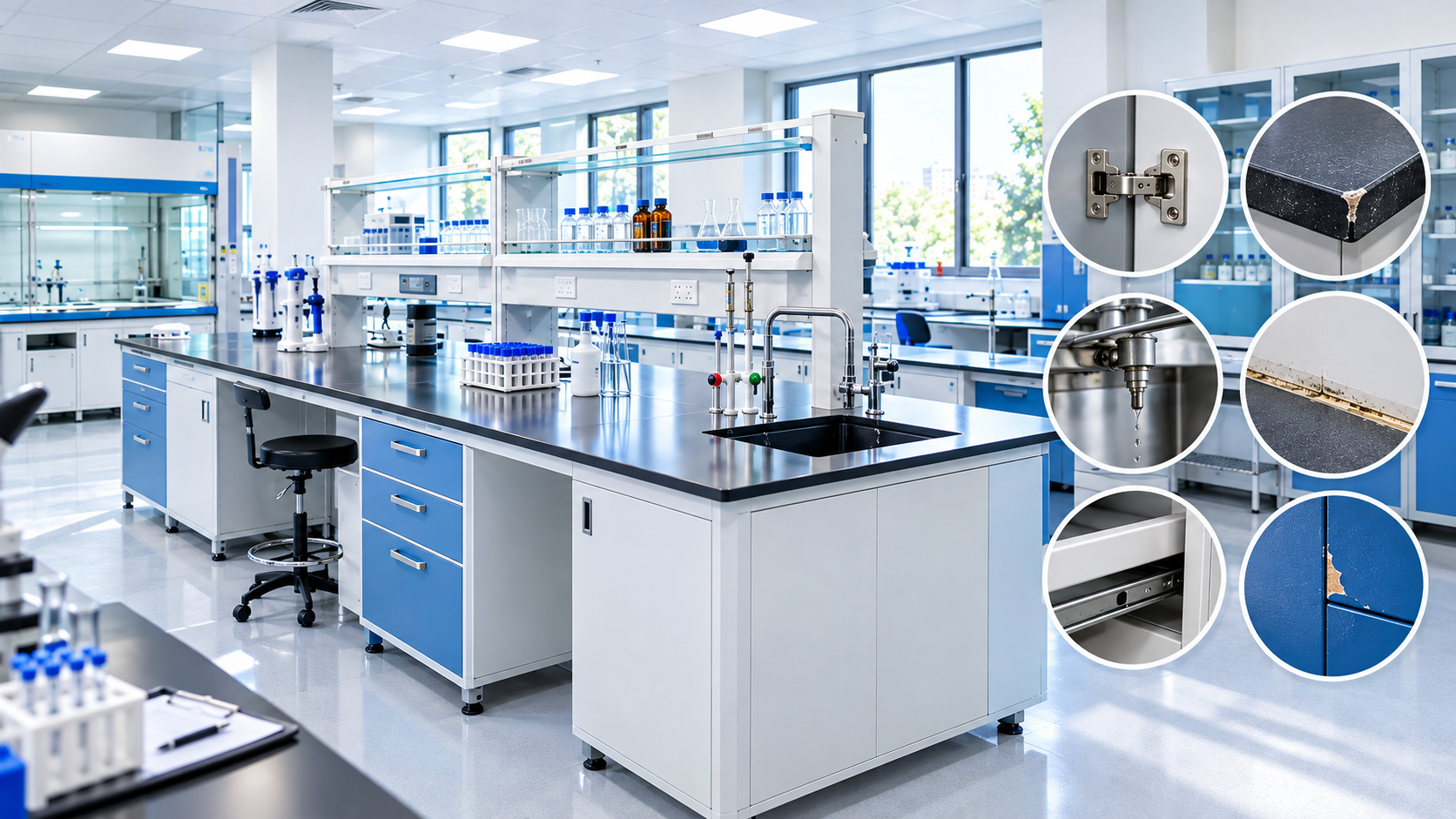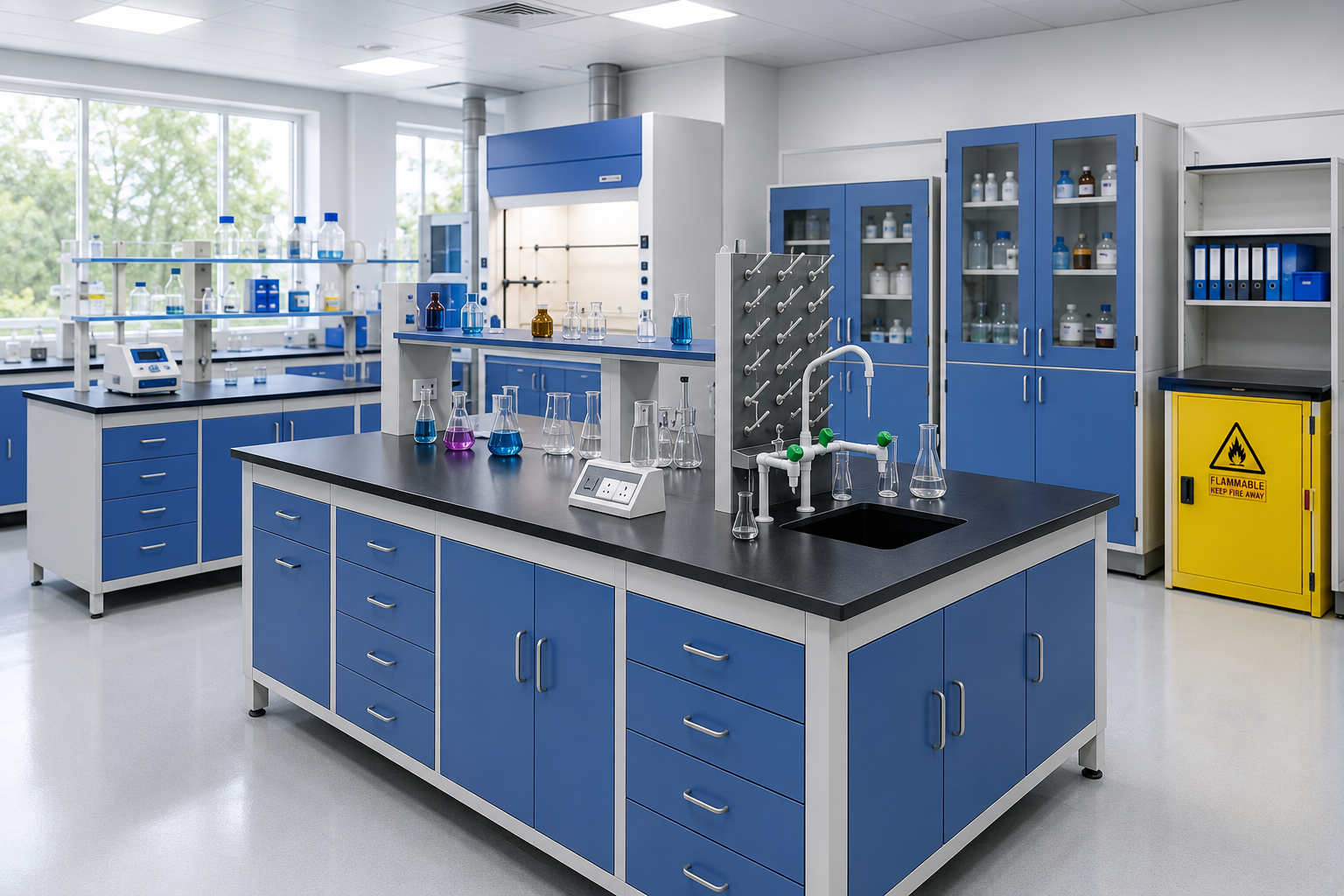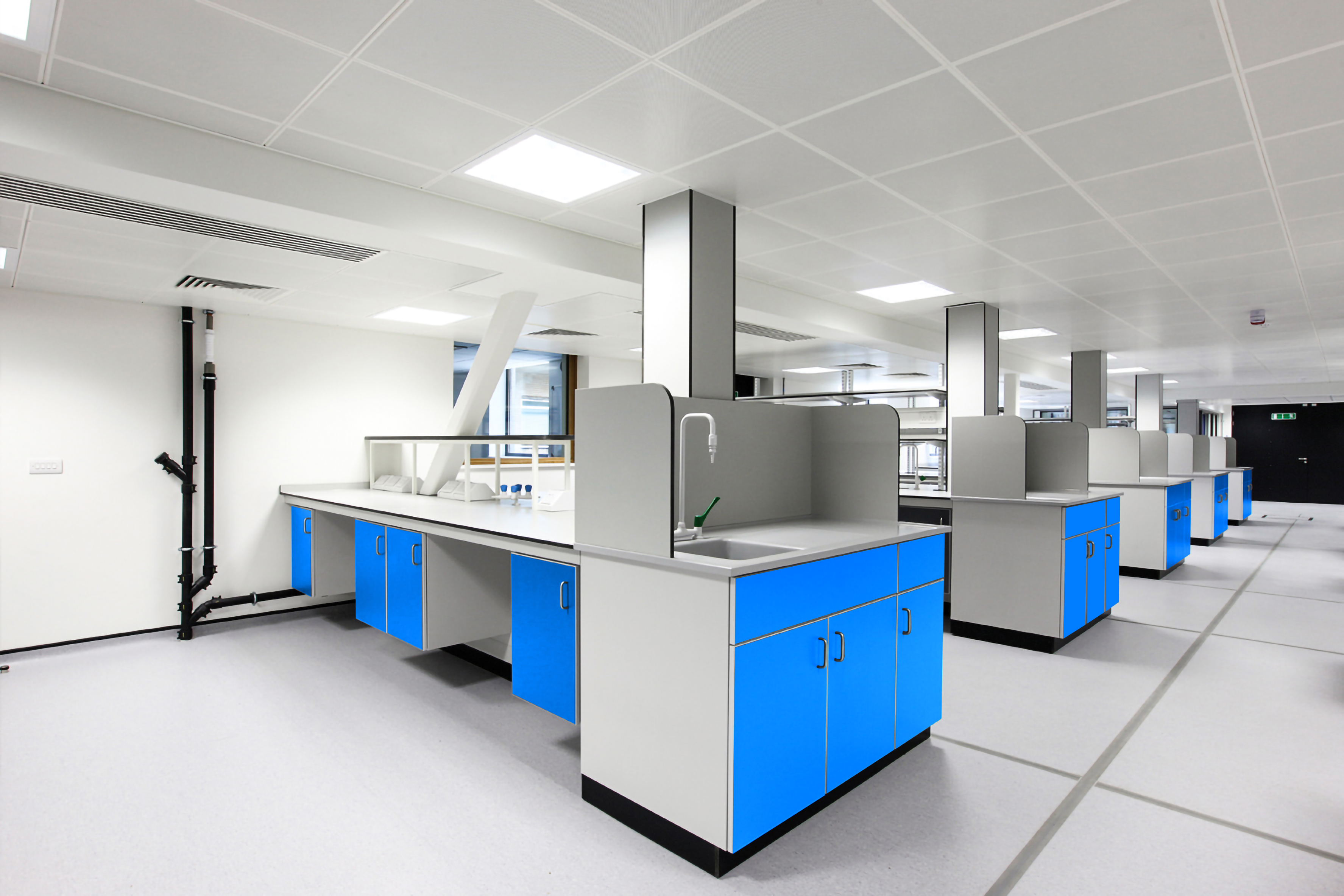
A good laboratory furniture manufacturer should offer chemical-resistant worktops (epoxy resin, phenolic resin or stainless steel), modular and customisable designs, in-house fabrication, an understanding of GMP, NABL and NABH requirements, and complete installation support. Match the worktop to your harshest chemical or process, confirm that the manufacturer can plan utilities and layouts, and ask for references from labs in your own sector.
Laboratory furniture is not office furniture with a tougher finish. It has to withstand acids, solvents, heat, moisture, heavy instruments and strict cleaning routines every single day. In a regulated lab, the wrong choice can mean failed audits, contamination risk, safety incidents and costly rework.
This guide explains what laboratory furniture includes, which materials suit which labs, what pharma, healthcare and research facilities each need, and how to evaluate a laboratory furniture manufacturer in Bangalore before you place an order.
Why the Right Laboratory Furniture Matters
Bangalore is one of India's major centres for pharmaceuticals, biotechnology, diagnostics, hospitals, and academic and industrial R&D. Quality control labs, formulation and analytical labs, pathology labs, university research labs and testing facilities all rely on furniture that does far more than hold equipment.
Well-designed laboratory furniture:
- Resists chemicals, heat and moisture, so surfaces stay intact and don't trap contaminants
- Improves workflow through logical bench layouts, proper aisle widths and reachable utilities
- Protects people with stable load-bearing, safe ergonomics and proper fume extraction
- Supports compliance with GMP, NABL, NABH and other applicable quality requirements
- Adapts over time as instruments, teams and research priorities change
Types of Laboratory Furniture
| Furniture type | Typical use | Key consideration |
|---|---|---|
| Island and peninsula benches | Central work areas in R&D and QC labs | Service access and aisle width |
| Wall benches | Perimeter work and instrument stations | Load capacity and utility integration |
| Fume hoods and fume cupboards | Handling volatile or hazardous chemicals | Airflow performance and ducting |
| Reagent shelves and wall cabinets | Storage above benches | Material resistance and stability |
| Storage cabinets (solvent, acid, general) | Safe chemical storage | Ventilation and compartment design |
| Anti-vibration instrument tables | Balances, microscopes, analytical instruments | Vibration damping and levelling |
| Sink units and wash stations | Washing and decontamination | Corrosion-resistant, leak-proof joints |
| Stainless steel furniture | Pharma, sterile and hygiene-critical areas | SS 304 or SS 316 grade and finish quality |
| Lab seating and stools | Ergonomic seating | ESD or cleanroom-grade where required |
How to Choose the Right Material
Material choice is the most important decision in any lab furniture project, and it should follow what actually happens in the lab.
1. Epoxy resin worktops
Best for chemistry, QC and research labs with heavy chemical exposure. Epoxy resin withstands strong acids, alkalis and solvents and tolerates heat and moisture, which makes it one of the most durable choices for demanding work.
2. Phenolic resin and compact laminate
A strong option for teaching labs, biology labs and general research. It resists moisture and many chemicals and usually costs less than epoxy resin, but it is less suited to extreme chemical exposure.
3. Stainless steel (SS 304 and SS 316)
The usual choice for pharma support areas, sterile zones and hospital laboratories. Its smooth, non-porous surface is easy to sanitise. SS 316 offers higher corrosion resistance, especially against chlorides and harsh disinfectants.
4. Powder-coated mild steel
Widely used for bench frames and storage cabinets. A quality epoxy powder coat protects against corrosion and wear, so ask about coating thickness and pre-treatment.
5. High-pressure laminate (HPL)
Suitable for dry labs, computer labs and light-duty benches. It is economical but not recommended for chemical-heavy work.
Rule of thumb: choose the worktop for the harshest chemical or process it will face, not for the average day.
Laboratory Furniture Requirements by Sector
Pharmaceutical laboratories
QC, microbiology, R&D, stability and analytical labs need furniture that supports GMP and revised Schedule M expectations for cleanability, material compatibility and contamination control. Look for:
- Smooth, non-shedding, easy-to-clean surfaces
- Stainless steel or epoxy resin worktops, depending on the area
- Sealed joints with minimal crevices
- Layouts that suit controlled or classified areas
- Documentation that supports audits and qualification
Healthcare and hospital laboratories
Pathology, microbiology and diagnostic labs prioritise hygiene, infection control and throughput. Choose sanitisable worktops, ergonomic layouts for high-volume sample handling, and robust sink and storage units. For NABL-accredited and NABH-aligned facilities, cleanability and layout discipline matter as much as appearance.
Research and academic laboratories
R&D labs need flexibility. Modular benches, reconfigurable storage and service-integrated systems let you adapt as research directions change, which saves money compared with fixed, one-off builds.
Biotech and life sciences laboratories
These labs often combine chemical, biological and instrument work in one space. Plan zones carefully, use anti-vibration tables for sensitive instruments, and specify materials for both chemical resistance and sanitisation.
Modular vs Fixed Laboratory Furniture
Modular furniture uses standard, interchangeable units (benches, cabinets, shelves and service panels) that can be reconfigured, expanded or relocated. It suits labs that expect growth or changing work.
Fixed (built-in) furniture is custom-built for a specific layout. It can make sense for specialised, permanent setups but offers little flexibility later.
For most modern labs in India, modular laboratory furniture gives better long-term value, shorter installation time and lower disruption when requirements change.
8 Things to Check Before Choosing a Laboratory Furniture Manufacturer
- Manufacturing capability. Does the company fabricate in-house or outsource? In-house control means more consistent quality, faster customisation and clear accountability.
- Material quality. Ask for material specifications, grades and test data for worktops, steel and coatings.
- Customisation. Your lab is unique. A capable manufacturer designs around your workflow instead of forcing standard sizes.
- Design and layout support. Look for 2D and 3D layouts, utility planning (gas, water, power, drainage) and ergonomic recommendations before fabrication starts.
- Compliance awareness. The team should understand GMP, NABL and NABH expectations and what they mean for furniture.
- Installation and after-sales support. Poor installation ruins good furniture. Confirm that site installation, levelling, sealing and handover are included.
- Track record. Ask for completed projects in your sector, preferably in Bangalore or Karnataka, and request references.
Warranty and service. Get warranty terms, spare availability and service response in writing.
Common Mistakes to Avoid
- Choosing on price alone. The cheapest worktop becomes the most expensive when it fails within a couple of years.
- Ignoring future expansion. Fixed layouts turn into obstacles when instruments or teams grow.
- Skipping utility planning. Adding gas, water and electrical points after installation is costly and messy.
- Mismatching materials and chemicals. Always verify chemical compatibility against your actual reagents.
- Overlooking ergonomics. Bench height, knee space and reach affect both productivity and safety.
- Poor coordination with other trades. Furniture must fit with ventilation, flooring, doors and utilities from the design stage.
Planning Checklist for Your Laboratory Furniture Project
- Define the lab type, processes, chemicals and equipment involved
- Confirm applicable standards (GMP, NABL, NABH)
- Finalise layout, workflow and utility requirements
- Select worktop, frame and storage materials for each zone
- Plan for future expansion and modular flexibility
- Check manufacturer capability, references and installation scope
- Clarify timelines, warranty and after-sales support
- Confirm whether the furniture must integrate with a cleanroom or controlled-area build
When Lab Furniture Is Part of a Larger Controlled Environment
If your laboratory sits inside a cleanroom or classified area, furniture must be planned together with wall and ceiling systems, doors, HVAC and flooring. In that case, working with a manufacturer that also delivers complete cleanroom turnkey solutions can reduce coordination gaps and simplify qualification.
Frequently Asked Questions
What does a laboratory furniture manufacturer do?
A laboratory furniture manufacturer designs, fabricates and installs specialised furniture for laboratories, including benches, fume hoods, storage units, sink stations and instrument tables, built to resist chemicals, heat and heavy daily use.
Which worktop is best for a pharma laboratory?
It depends on the area. Epoxy resin suits chemical-intensive QC and R&D labs, while stainless steel (SS 304 or SS 316) is preferred for hygiene-critical and sterile zones.
What is the difference between epoxy resin and phenolic resin worktops?
Epoxy resin offers higher resistance to strong acids, alkalis and solvents and is used for demanding chemical work. Phenolic resin is more economical and suits teaching, biology and general-purpose labs with moderate chemical exposure.
Is modular laboratory furniture better than fixed furniture?
For most modern labs, yes. Modular systems can be reconfigured, expanded or relocated as needs change, which reduces long-term cost and downtime.
How long does laboratory furniture installation take?
Timelines depend on project size, customisation and site readiness. A small lab may take a few weeks, while larger facilities take longer. A manufacturer with in-house fabrication can usually commit to firmer schedules.
What should I check before hiring a laboratory furniture manufacturer?
Check in-house manufacturing, material quality, customisation, layout support, compliance knowledge, installation scope, sector experience, references and warranty terms.
Can laboratory furniture be customised for my lab layout?
Yes. A good manufacturer designs benches, storage and utility integration around your workflow, room dimensions and equipment list.
Do you supply laboratory furniture across India?
Venair Solutions is based in Bangalore and supplies laboratory furniture to pharma, healthcare and research facilities across India.
Conclusion
The right laboratory furniture protects your people, your samples and your compliance record for years. Prioritise material suitability, modular design, regulatory awareness and installation quality, and choose a manufacturer who plans around how your lab actually works.
Planning a pharma, healthcare or research laboratory in Bangalore or elsewhere in India? Venair Solutions designs and manufactures laboratory furniture built for demanding lab environments. Request a free consultation and quote →