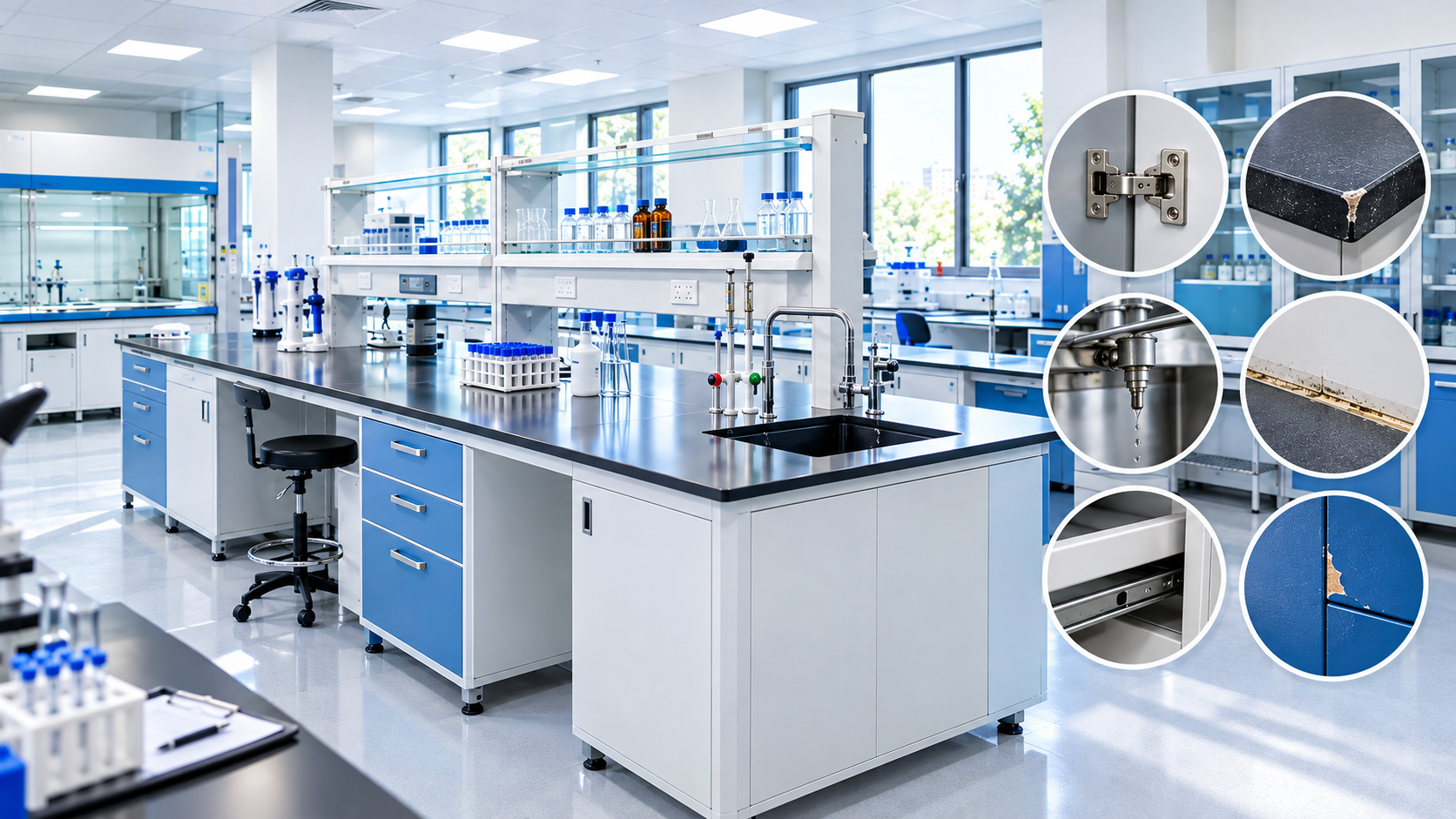
Picture this. You have just set up a brand-new laboratory. The benches look sharp, the cabinets are neatly aligned, and the stainless steel sink gleams under the lights. Fast forward eighteen months. There are tiny rust-coloured spots near the drain, a rough patch where someone rinsed out a chloride solution, and a faint stain that no amount of scrubbing removes.
What went wrong? In most cases, the answer is simple: the sink material did not match the chemicals it was asked to handle.
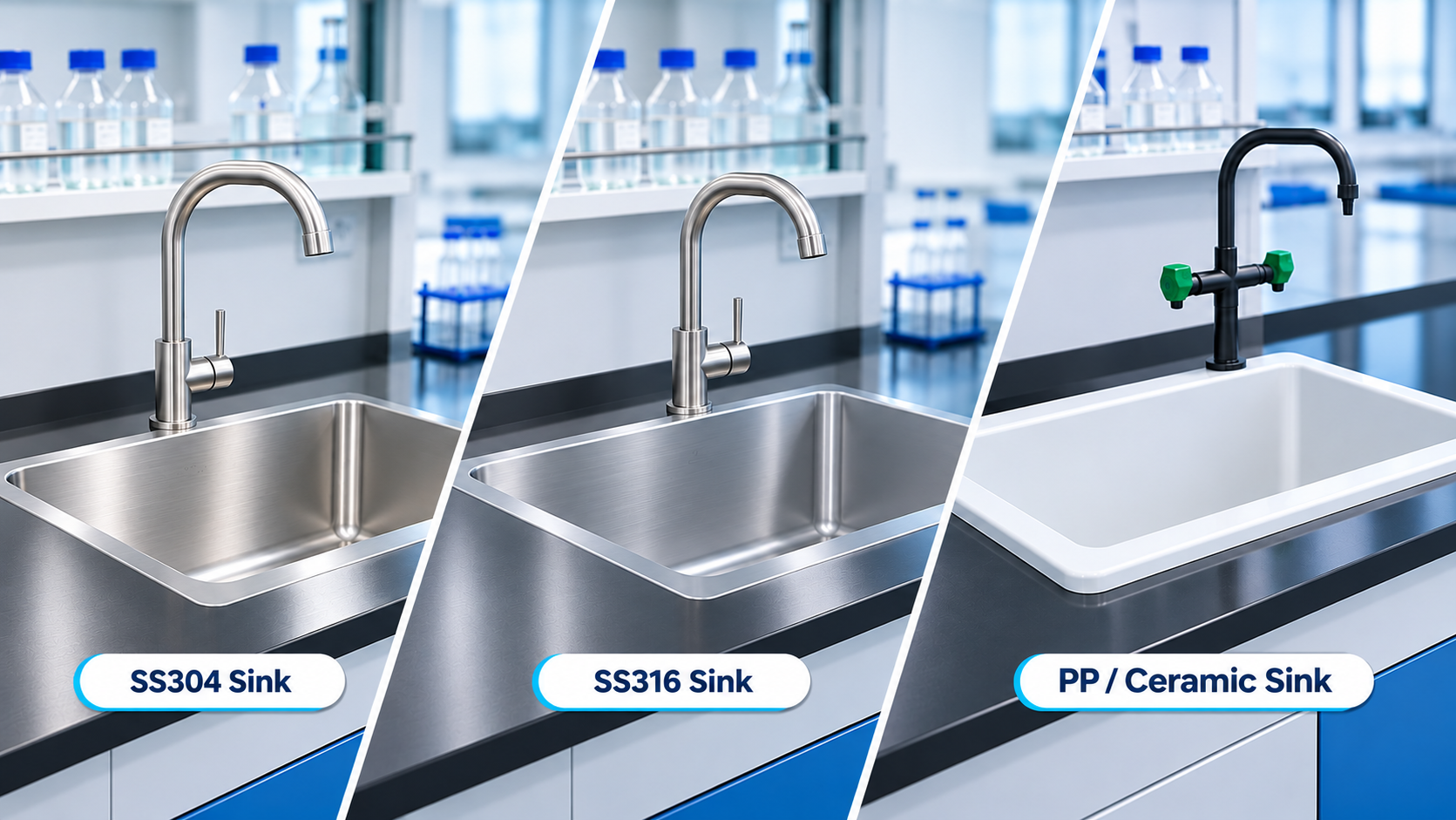
If you are planning a new lab, upgrading an old one, or replacing a sink that has not held up, this guide will help you choose between the four most common options: SS304, SS316, polypropylene (PP) and ceramic. We will look at how each one behaves around acids, alkalis, chlorides and solvents, and which one makes sense for your kind of lab.
The Short Answer (For Those in a Hurry)
If you want the quick version, here it is.
For pharmaceutical, biotech, QC and microbiology labs, SS316 is usually the safest bet. For general labs with light chemical use, SS304 does the job at a lower cost. If your work involves a lot of acids, especially hydrochloric acid, PP or ceramic will outlast stainless steel. And if you are tempted to pick purely on price, keep reading, because that is where most labs go wrong.
No single material resists every chemical. The right choice depends on what goes down your drain, how strong it is, how hot it is, and how often it happens.
Why Your Sink Deserves More Attention Than It Gets
Most people planning a lab spend their time on layouts, airflow and equipment. The sink tends to be an afterthought. But think about what it deals with every day: acid rinses, alkaline detergents, solvent residues, disinfectants, hot water and the occasional spill nobody reports.
Over time, the wrong material shows its weakness in several ways. Surfaces pit and roughen, which makes cleaning harder. Stains set in. Plastic can warp, and ceramic can crack. In regulated environments, a damaged surface that cannot be cleaned properly can also turn into an audit observation. And of course, replacing a sink later costs far more than choosing correctly the first time.
That is why the sink should be planned together with the rest of your modular lab furniture, so the worktop, cabinets and sink are all suited to the same chemical load.
Start With a Simple Question: What Goes Down Your Drain?
Before comparing materials, write down what your lab actually pours into the sink. Not what you think it uses, but what it really uses day to day.
Think about acids such as hydrochloric, sulphuric, nitric and acetic. Think about alkalis like sodium hydroxide. Then think about chlorides, which include saline solutions, bleach and many disinfectants. Add organic solvents, strong oxidisers, and finally heat, since hot wash-downs affect materials differently.
Here is the part many labs miss. A lab that mostly handles alcohol and water but uses a chloride-based disinfectant every day has a very different requirement from one that only does dry sample preparation. The disinfectant, not the main workflow, is often what damages the sink.
SS304: The Reliable Everyday Option
SS304 is the stainless steel most people picture when they think of a lab sink. It contains roughly 18% chromium and 8% nickel. The chromium forms a thin protective layer on the surface that repairs itself when scratched, which is why stainless steel resists corrosion in everyday conditions.
It has plenty going for it. The surface is smooth and non-porous, so it cleans easily. It handles heat well, which is useful for hot water and wash-downs. It shrugs off knocks and dropped glassware. And it costs less than SS316.
The weakness is chlorides. Salt solutions, bleach and some disinfectants can cause pitting, which are tiny pits that form on the surface and grow over time. SS304 also does not stand up to hydrochloric acid, even in dilute form.
So where does it fit? Teaching labs, general-purpose benches, sample-preparation areas and any zone where chemical exposure is light and predictable. If that describes your lab, SS304 is a sensible, economical choice. If it does not, the money you save upfront may be spent again on a replacement.
SS316: The Standard for Demanding Labs
SS316 looks almost identical to SS304, but there is a crucial difference in its recipe. It contains about 2–3% molybdenum, and that small addition makes a big difference in how the metal handles chlorides and pitting.
In practical terms, SS316 gives you a wider safety margin. It copes better with saline solutions and many disinfectants, and it performs better with many organic acids and dilute sulphuric acid. It also keeps the same easy-to-clean surface, heat tolerance and toughness as SS304. Where welding is involved, the low-carbon grade SS316L is often preferred because it reduces the risk of corrosion around weld joints.
This is why pharmaceutical QC labs, biotech facilities, microbiology labs and healthcare labs so often specify SS316. These environments clean and disinfect surfaces constantly, and they need a material that will not break down under that routine.
But SS316 is not invincible. It still cannot handle hydrochloric acid or hydrofluoric acid, and strong chlorides left standing on the surface can still cause damage. It also costs more than SS304. For many labs, though, that extra cost is cheap insurance.
Polypropylene (PP): The Acid Specialist
Now let us talk about a material that does something stainless steel cannot. Polypropylene is a tough thermoplastic that PP lab sinks are made from, and it is a familiar sight in chemistry labs and fume hood cup sinks.
Its biggest strength is chemical resistance. PP handles most acids, including hydrochloric acid, along with alkalis and salt solutions. It does not rust, because there is no metal to corrode. It is lightweight, easy to install and usually more affordable than stainless steel. It is also quieter, since there is less splash noise.
The trade-offs are real, though. PP does not like strong oxidising agents such as concentrated nitric acid. Some hot organic solvents, particularly aromatic and chlorinated ones, can cause it to swell or soften. It cannot take as much heat as stainless steel, so hot plates, flames and very hot liquids are a poor match. And it scratches more easily, so you will want to clean it with soft tools.
For acid-heavy analytical labs, acid-wash stations and fume hood areas, PP is often the most practical choice. One more point worth remembering: corrosive vapours do not stop at the sink. They affect nearby fixtures and ductwork too, so your sink choice should be aligned with your HVAC and ventilation design.
Ceramic: Hard, Glazed and Acid Resistant
Ceramic sinks have been used in laboratories for a long time, and for good reason. The glazed surface is hard and non-porous, so it does not absorb liquids and resists staining. It stands up well to most acids and many other chemicals, and since there is no metal, there is no rust.
The catch is that ceramic is brittle. A heavy beaker dropped at the wrong angle can chip or crack it. It is also heavy, so the bench needs to be properly supported. Sudden swings between very hot and very cold liquids can cause thermal shock. Hydrofluoric acid attacks the glaze, and strong hot alkalis can slowly dull it over time.
Ceramic works best on fixed benches in acid-use areas where impact risk is low and a hard, smooth surface is preferred. In a busy lab where glassware is moved around constantly, it may not be the most forgiving choice.
How They Compare at a Glance
Sometimes a table says it better than paragraphs. Here is a quick comparison:
| Factor | SS304 | SS316 | PP | Ceramic |
|---|---|---|---|---|
| Dilute acids | Fair to good | Good | Excellent | Excellent |
| Hydrochloric acid | Poor | Poor | Excellent | Excellent |
| Chlorides / bleach | Poor to fair | Better | Excellent | Excellent |
| Alkalis | Good | Good | Excellent | Good |
| Strong oxidisers | Good | Good | Poor | Good |
| Heat tolerance | Excellent | Excellent | Limited | Good |
| Impact resistance | Excellent | Excellent | Good | Low |
| Relative cost | Low–medium | Medium–high | Low | Medium |
This is a general guide. Resistance depends on concentration, temperature and exposure time. Always check your chemicals against the manufacturer’s chemical resistance chart.
Which Sink for Which Lab?
Let us put this into real-world terms.
If you run a pharmaceutical QC or R&D lab, SS316 is typically the preferred option, thanks to its cleanability and resistance to disinfectants. This is especially true if your lab sits inside or near a controlled space, where it should fit neatly with your modular cleanroom layout.
For microbiology and biotech labs, SS316 again makes sense because of frequent disinfectant and saline use.
For analytical and chemistry labs with heavy acid use, PP is a strong choice, with ceramic as an option where impact risk is low.
For teaching and general-purpose labs, SS304 usually works if chemical use is light, while PP suits teaching labs that handle acids.
And for fume hood areas, PP cup sinks are common because they handle corrosive waste without rusting.
Don’t Judge a Sink by Its Price Tag
Here is something that catches many buyers out. The cheapest sink is rarely the cheapest over time.
Imagine an SS304 sink in a lab that uses chloride-based cleaners daily. It might need replacing in a few years, with new installation costs, downtime and disruption. A properly chosen SS316 or PP sink might last far longer. When you add up purchase cost, lifespan, maintenance and replacement, the “expensive” option often turns out to be the economical one.
So when you compare quotes, ask yourself: how long will this last with my chemicals?
Keeping Your Sink in Good Shape
Whatever you choose, a little care goes a long way.
For stainless steel, rinse thoroughly after exposure to chlorides, bleach or acids, and never leave chloride-based cleaners sitting on the surface. Avoid steel wool and iron-based scouring pads, which can leave particles behind that cause rust spots, and clean along the grain using non-abrasive products.
For PP, keep hot solvents and hot plates away, use soft cleaning tools and check welds and joints from time to time.
For ceramic, handle glassware carefully near the sink, avoid sudden temperature changes and keep hydrofluoric acid well away.
Mistakes We See Again and Again
Over the years, a few errors keep appearing. Labs pick SS304 for chloride-heavy work to save money, then see pitting within a few years. Some assume “stainless” means “chemical-proof”, when it clearly does not handle hydrochloric acid. Others install PP where hot solvents are poured, or put ceramic on a bench where glassware is dropped regularly. And many choose without ever checking a chemical compatibility chart.
The biggest mistake of all is treating the sink as separate from the rest of the lab. Sink, worktop, cabinets, ventilation and drainage all work as one system.
Frequently Asked Questions
Which is better for a lab sink, SS304 or SS316?
SS316 is better where chlorides, saline solutions or strong disinfectants are used, because its molybdenum content improves resistance to pitting. SS304 suits general, lower-exposure use.
Can stainless steel handle hydrochloric acid?
No. Both SS304 and SS316 can be attacked by hydrochloric acid, even in dilute form. PP or ceramic is a better option.
Is a polypropylene sink good for laboratory use?
Yes, especially for acid- and alkali-heavy work. It is not recommended for strong oxidisers or some hot solvents.
Are ceramic lab sinks chemical resistant?
They resist most acids and many chemicals, but they are brittle and are attacked by hydrofluoric acid.
Which material is best for a pharmaceutical lab sink?
SS316 is the most common choice because of its cleanability, durability and chloride resistance. Always confirm against your own cleaning protocols.
How do I know if a sink suits my chemicals?
Compare each chemical, concentration and temperature against the manufacturer’s chemical resistance chart, or ask your lab furniture supplier before finalising.
Final Thoughts
Choosing a lab sink is as much a chemistry decision as a furniture decision. SS304 offers economy for everyday use. SS316 gives regulated and chloride-exposed labs the safety margin they need. PP handles the aggressive acids that stainless steel cannot. Ceramic brings a hard, acid-resistant surface to stable benches. The best sink is the one that matches your real chemical workflow, not the one that simply looks good in a quotation.
Need Help Choosing the Right Sink for Your Lab?
At Venair Solutions, we design and supply modular lab furniture, cleanroom solutions, HVAC systems and validation services from our base in Bangalore. Share your chemical list, lab layout and application, and our team will help you plan a sink and bench setup that lasts.
👉 Talk to our team for a free consultation or call +91 98451 90711.
Building a controlled environment? Our cleanroom validation services can help document that your facility meets the required standards.